Why You Can’t Hook Your Sump Pump to the Sanitary Sewer (And What to Do Instead)
If your basement has ever flooded during a heavy downpour, you know that your sump pump is the unsung hero of your home. It kicks on, moves thousands of gallons of unwanted water, and keeps your foundation dry.
However, where that pumped water actually goes matters just as much as getting it out of your basement. If your sump pump drains directly into a basement sink, a floor drain, or a pipe leading into your home’s main wastewater line, you’ve created a cross-connection to the sanitary sewer—a setup that local municipalities take very seriously.
Here is why cities prohibit this connection, the problems it causes for your community, and how your sump pump should actually be set up.
The Problem: Overloading the Sewage System
To understand the ban, it helps to distinguish between the two types of water leaving your property:
- Sanitary Wastewater: Water from your toilets, showers, sinks, and washing machines. This water contains human waste, soap, and grease, and it must travel to a wastewater treatment plant to be sanitized before being released back into local waterways.
- Stormwater / Groundwater: Clean rain runoff and groundwater collected around your foundation. It requires zero chemical treatment.
When a sump pump routes groundwater directly into the sanitary sewer, it introduces Inflow and Infiltration (I&I).
During heavy rainfall, thousands of sump pumps discharging clean groundwater simultaneously can overwhelm municipal sanitary lines. Wastewater treatment plants are designed to handle predictable daily sewage volumes—not millions of extra gallons of rainwater.
The Consequences of Cross-Connections
- Basement Sewage Backups: When sanitary mains overflow due to excessive stormwater, raw sewage takes the path of least resistance—which often leads right back up into neighborhood basements through floor drains.
- Environmental Contamination: When treatment facilities exceed maximum capacity, they are forced to bypass untreated sewage directly into local rivers, lakes, and streams to prevent total plant failure.
- Skyrocketing Utility Costs: Municipalities pay to treat every single gallon of liquid that enters the processing plant. Paying thousands of dollars to sanitize clear groundwater raises sewer rates for the entire community.
- Fines and Code Violations: Because of these risks, most city plumbing codes explicitly ban cross-connections. Municipal inspectors regularly conduct dye tests or smoke tests to find illegal sump connections, and homeowners with non-compliant systems face mandatory corrections and municipal fines.
Where Should Your Sump Pump Water Go?
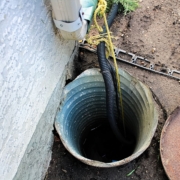
Your sump pump should discharge outside your home, away from the foundation, where the water can naturally absorb or flow into municipal infrastructure designed for raw runoff.
- On-Lot Surface Discharge: Extend your sump discharge pipe to drain on your lawn or garden, at least 10 to 20 feet away from your home’s foundation walls, sloped down and away from neighboring properties.
- Dedicated Storm Sewer: In many residential areas, cities provide a dedicated storm sewer line (separate from the sanitary sewer). If local regulations permit, your pump can tie directly into this underground storm branch.
If your current sump pump setup empties into a sewer drain or a utility sink, consult a licensed plumber to re-route your discharge line outside. It protects your local water infrastructure, keeps sewer rates lower, and saves your neighborhood from nasty sewer backups during the next major storm.